



Text & Interview by Takashi Watanabe
From Start to the Present
Can you introduce the band members?
KON RYU: I’m KON RYU, the guitar vocalist. Nice to meet you.
KENTARO: I’m KENTARO, I play guitar and do backing vocals.
SATOSHI: I’m SATOSHI, I play guitar.
KON KEN: I’m KON KEN, the backing vocalist, bassist, and band leader.
KIWAMU: I’m KIWAMU, and I play percussion.
Can you tell us how YOUTH OF ROOTS started?

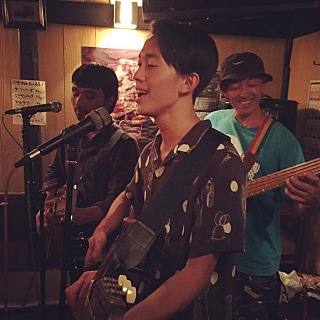
KON KEN: Yes, 2016. Before that, we were part of a backing band called “Kobushi POWA Band,” organizing events like bringing artists to local venues like the beach house Oasis. During that time, RYU would occasionally sing while playing the MPC or guitar during backing gigs. We were playing around with the reggae band style. Eventually, RYU started composing songs, and we thought it would be better to give the band a name forcused on the next generation. That’s when we came up with YOUTH OF ROOTS among several name options.
Why a roots reggae band?

KON RYU: It all started in 2014 when I first went to Jamaica and was captivated by roots reggae. At that time, CHRONIXX, PROTOJE, JESSE ROYAL, and others were leading the reggae revival movement. One live performance by RAGING FYAH, a band playing in that style, left a strong impression on me.
In Japan, there was a roots reggae band called OISO ROCKERS. I went to their live show with KON KEN, who was called as their dub engineer, and I was surprised and excited to see that there was a roots reggae scene in Japan, too.
KON KEN: Yes, and gradually, we started getting invited to more events. People who saw us would invite us to perform, and our activity expanded little by little.
Then, the current members joined after that?

SATOSHI: I was playing with the band OISO ROCKERS, which RYU mentioned earlier. So at first, I watched YOUTH OF ROOTS as an audience member. Then, about seven years ago, KON KEN invited me to join, and that’s when it started for me.

KENTARO: I met RYU about three years ago at the Oasis in Hayama, and we found out we had mutual friends. After that, we started jamming together in the studio, and eventually, I joined the band.
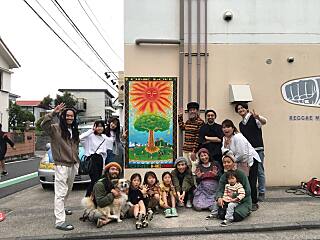
KIWAMU: I’ve been playing with the band recently. Around April 2024, KON KEN contacted me, saying that they had returned from Jamaica and were working on an album. He asked if I could boost everyone’s vibes and maybe brighten up the local kids, who were always walking around with gloomy faces…
KON RYU: In the morning, right? They’re always lively after school, though (laughs).
KIWAMU: Yes, exactly. Every morning, these elementary school kids looked like gloomy office workers on their way to school. So KON KEN asked if I could paint something on the studio wall to brighten things up. I had already painted YOUTH OF ROOTS’ lion flag before.
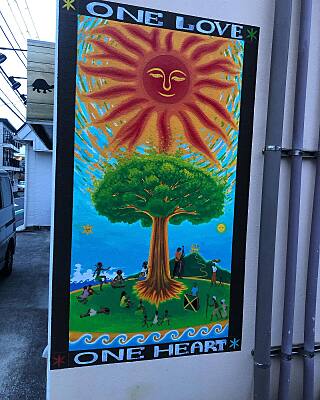
While I was painting the mural, I was talking with KON RYU, and he mentioned they didn’t have a percussionist. I’ve played the kete drum in the Nyabinghi style of reggae, so I said I’d like to join. And that’s how I became part of the band.
How was the "YOUTH OF ROOTS TOUR 2024" at the end of June?

KIWAMU: I had only just joined the band around that time, so every day felt like an incredible experience for me—something I hadn’t anticipated at all. A month before, I couldn’t have imagined it. Even though I had played reggae drums before, KON KEN taught me many new things. I approached it with a beginner’s mindset, and thanks to the band’s energy and the enthusiastic audience, it was an exciting experience.
You got called up pretty suddenly, didn’t you?
KIWAMU: Yeah, it was all so sudden (laughs). I never saw it coming.
KON RYU: You really saved us! JAH GUIDANCE.
KIWAMU: JAH GUIDANCE and ITECTION, for sure. It was a truly wonderful experience.
KON KEN: How did the kids react? There were your kids right at the front.
KIWAMU: Yeah, in Tokyo, my own kids were right in front of me. They were really inspired, saying they wanted to do music too.
KON RYU: That’s fire!
Any particularly memorable moments from the tour?

SATOSHI: In Fukuoka, I noticed something special—a grandmother, her daughter, and her grandchild attending the show together. At every venue, I saw a few people from different generations or mixed backgrounds.
KON KEN: In Fukuoka, it seems there was this guy from Africa who had fought and defeated a lion!
KON RYU: He really enjoyed the show, he was shouting out loud!
KON KEN: We’re the band that made a man who fought a lion that happy (laughs).
KON RYU: LION PAW, LION PAW!
SATOSHI: As we played across three locations, I felt like we were growing together. It was a great learning experience.
KENTARO: I’m originally from Kyushu, so it was great to play in Fukuoka. And as mentioned earlier, the shows really attracted a wide range of ages.



KENTARO: The audience was singing along to everything.